
Cyberattacks are hitting small businesses hard, with 1 in 3 SMBs targeted last year and 82% of ransomware victims being SMBs. Zero Trust security can protect your business without breaking the bank. Here's how:
- What is Zero Trust? A security approach based on "never trust, always verify." It continuously checks every user and device before granting access, reducing risks from both internal and external threats.
- Why SMBs Need It: SMBs face limited budgets, small IT teams, and outdated tools, making them prime targets. Zero Trust helps protect sensitive data, reduce downtime, and prevent costly breaches.
- How to Start on a Budget:
- Enable multi-factor authentication (MFA) (free with services like Microsoft 365).
- Apply least privilege access to limit unnecessary permissions.
- Use existing tools like firewalls and VPNs for network security.
- Leverage free or open-source tools like Cloudflare Access or Tailscale.
- Affordable Solutions: Cloud-based tools with pay-as-you-go pricing and free trials make Zero Trust accessible for SMBs.
Quick Tip: Start small by focusing on critical assets, then expand gradually. Partnering with managed IT providers can also reduce costs and simplify implementation. Zero Trust doesn’t have to mean zero budget - protect your business today.
Zero Trust Guidance for Small and Medium Size Businesses (SMBs)
How to Implement Zero Trust on a Budget
When security meets tight budget constraints, implementing Zero Trust might seem daunting. But here's the good news: you don’t need to overhaul your entire infrastructure or spend like a Fortune 500 company to get started. By leveraging what you already have and making smart, incremental investments, you can build a strong Zero Trust framework without breaking the bank.
A phased approach works best. Start by focusing on your most critical assets, then layer in additional protections over time.
Start with Identity and Access Management
At the heart of Zero Trust lies identity verification. Every user and device must prove who they are before accessing any resource - no exceptions.
The first step? Enable multi-factor authentication (MFA). It’s one of the most effective ways to prevent account compromise, blocking up to 99.9% of attacks. The best part? Platforms like Microsoft 365 and Google Workspace include built-in MFA options at no extra cost.
Next, implement the principle of least privilege access. This ensures employees only access what’s necessary for their role. For example, someone in accounting shouldn’t have access to sensitive HR files or development tools unless explicitly authorized. If someone tries to access restricted data or escalate privileges, the system should flag it immediately.
For even stronger security, consider adaptive authentication. This adds context-aware checks like location, device type, and behavior patterns. Many cloud-based identity providers include these features in their standard offerings, making advanced security accessible even on a budget.
Once you've secured identities, you can expand Zero Trust principles to your network using the tools you already own.
Use Existing Infrastructure for Network Security
Before buying new security tools, take a closer look at what’s already in place. Many small and medium-sized businesses (SMBs) have tools that can be reconfigured to align with Zero Trust principles - often without additional costs.
- Firewalls: Adapt existing firewalls to enforce microsegmentation. This creates smaller, isolated network segments, limiting the spread of breaches.
- VPNs: Configure VPNs to grant access to specific applications based on user roles, rather than giving full network access.
- Endpoint security: Use your current endpoint solutions to enforce compliance policies, ensuring devices meet security standards before accessing the network.
Additionally, use your existing monitoring tools to track user activity and network events in real time. Continuous monitoring strengthens your defenses by identifying suspicious behavior as it happens.
Use Open-Source and Free Tools
Open-source tools bring flexibility and transparency - perfect for SMBs looking to stretch their budgets. These tools allow you to customize and adapt solutions to your needs without being locked into expensive vendor contracts.
- Cloudflare Access: Offers secure remote access with identity verification and basic access policies, making it a great alternative to traditional VPNs for smaller teams.
- Tailscale: Simplifies remote access by creating encrypted, point-to-point connections between devices. Its free plan supports up to 20 devices, ideal for small teams.
- Authentik: An open-source identity and access management tool that handles authentication, authorization, and single sign-on. It’s a lightweight, cost-effective alternative to pricey enterprise solutions.
Many vendors also provide free trials or scaled-down versions of their enterprise tools, letting you test solutions before committing to a paid plan. By starting with free tools for critical needs and gradually investing in paid options as your business grows, you can build Zero Trust expertise while keeping costs low. These small steps lay the groundwork for future investments as your security needs evolve.
Prioritizing Investments for Maximum Impact
In the U.S., only 48% of small businesses have adopted Zero Trust principles. Considering that cyberattacks can cost small and medium-sized businesses (SMBs) anywhere from $250,000 to $7,000,000, it’s clear that strategic spending on security is not just smart - it’s essential. By focusing on the most impactful security measures, you can ensure every dollar strengthens a scalable and cost-conscious Zero Trust framework. Once you’ve laid a solid foundation, it’s time to implement the key components of Zero Trust.
Core Zero Trust Security Measures
Start with email protection. Email remains the top attack vector, with 43% of cyberattacks targeting small businesses. Most cloud email platforms, like Microsoft 365 and Google Workspace, come equipped with anti-phishing tools and safe attachment scanning. Properly configuring these features can stop the majority of threats before they ever reach your employees.
Next, prioritize endpoint detection and response (EDR). Every device connected to your network needs monitoring and protection. Built-in tools like Windows Defender offer a good starting point, but upgrading to solutions with behavioral analysis and automated threat responses can provide an extra layer of security. While these tools typically cost between $500 and $2,000 annually, that’s a small price compared to the potential cost of a successful breach.
Implement conditional access policies and data classification to protect sensitive assets. These policies assess factors like user location, device health, and application sensitivity before granting access. Many cloud platforms make configuring conditional access straightforward and often include these features at no extra cost. Start by identifying your most sensitive data, then apply encryption and access controls to ensure it’s only available to authorized users.
Conducting a cybersecurity risk assessment is another critical step. It can help SMBs uncover security gaps, reduce vulnerabilities, meet compliance requirements, and prepare effective incident response plans.
These essential measures create a robust security foundation that not only protects against common threats but also grows with your business.
Future Security Goals
Once the basics are in place, you can shift your focus to advanced capabilities that elevate your security strategy from foundational safeguards to a fully integrated system.
Network microsegmentation is a game-changer. Instead of treating your internal network as a single trusted zone, microsegmentation divides it into isolated segments. For example, you could separate accounting systems from marketing tools or keep development environments apart from production systems. While it may be challenging to implement initially, this approach significantly minimizes the impact of any breach.
AI-driven behavioral analytics offer cutting-edge threat detection. These tools learn typical user and device behavior, flagging anything unusual. For example, if an employee suddenly downloads large amounts of data at 3 AM from an unfamiliar location, the system can raise an alert. As AI technology becomes more accessible, SMBs are increasingly able to integrate these advanced tools into their security plans.
Zero Trust Network Access (ZTNA) is another step forward. Unlike traditional VPNs, ZTNA provides application-specific access controls. This means remote workers can only access the specific tools or systems they need, reducing the attack surface while maintaining a smooth user experience.
Finally, consider automated incident response. These systems can isolate compromised devices, revoke credentials, and initiate containment protocols immediately after detecting a threat. With cyberattacks becoming more sophisticated, this level of automation is critical for staying ahead.
Given that 81% of SMBs believe AI increases the demand for stronger security measures, planning for these advanced capabilities is key to staying ahead of emerging threats. Additionally, with 80% of SMBs planning to boost their cybersecurity budgets - focusing on data protection - this phased approach ensures that every investment strengthens your overall security strategy while adapting to your business’s growth.
sbb-itb-6052d70
Common Challenges in Zero Trust Adoption
Implementing Zero Trust security measures can be a game-changer for small and medium-sized businesses (SMBs). But as promising as it sounds, the path to adoption isn't without hurdles. With 61% of SMBs facing at least one cyberattack in the past year and the average data breach costing over $3 million, these challenges are not just inconvenient - they're critical to address. The silver lining? With the right strategy and planning, these obstacles can be tackled effectively. Below, we’ll dive into three key challenges SMBs face when adopting Zero Trust.
Working with Legacy Systems
Outdated systems are often one of the toughest barriers to Zero Trust adoption. These older infrastructures and applications weren’t designed with modern security in mind, making them incompatible with the dynamic access controls and ongoing verification Zero Trust demands. Rushing to integrate these systems can lead to operational disruptions.
But here's the thing: you don’t need to overhaul everything at once. A phased approach, like using microsegmentation, can help secure legacy environments without disrupting your business. As Robert Cooper, Senior Security Architect at Autodesk, puts it:
"Adopting zero-trust technologies can feel like yet another thing to learn, but when done well, it can protect even tender legacy zones with little to no noticeable impact. Implementing micro-segmentation is one example of how this can be done."
Start by isolating legacy systems into separate network zones, adding stronger monitoring and access controls to these areas. This provides immediate security upgrades while giving you time to plan for modernization.
Additionally, integration tools and bridge software can connect legacy systems to Zero Trust frameworks without requiring a full replacement. Partnering with vendors who can tailor their solutions to your existing setup might seem costlier upfront but can save you from the operational chaos of ripping out and replacing systems.
Staff Training and Awareness
Your employees can either be your greatest asset or your weakest link in maintaining Zero Trust security. Resistance often stems from a lack of understanding about why these measures are necessary or how they benefit the organization.
The solution? Clear communication. Explain how these changes protect the business and employees alike. Make the training relatable by focusing on real-world scenarios: spotting phishing emails, practicing safe browsing, and adhering to security policies. Real-life examples of cyberattacks and their consequences can make the risks and the need for vigilance more tangible.
Training shouldn’t be a one-and-done event. Regular, engaging sessions are far more effective. If your budget allows, use phishing simulation tools, or create simple internal tests to reinforce awareness. The ultimate goal is to foster a culture where reporting suspicious activity becomes second nature.
Make the process seamless by choosing security tools that don’t disrupt daily tasks. And don’t forget - leadership needs to set the tone. When management follows the same security protocols expected of staff, adoption rates improve significantly.
Meeting Regulatory and Compliance Requirements
For many SMBs, concerns about compliance can make Zero Trust adoption seem daunting. But the truth is, Zero Trust principles often align with existing regulatory frameworks, and implementing them can even simplify compliance efforts.
For example, NIST 800-207 offers a detailed Zero Trust framework that SMBs can adopt without needing expensive consultants. Similarly, CISA’s Zero Trust Maturity Model breaks implementation into manageable phases, making it ideal for smaller organizations. Since most regulations already require robust access controls, data protection, and audit trails, incorporating these into your Zero Trust strategy can streamline compliance and reporting.
Zero Trust systems also automatically log access details, making it easier to meet reporting requirements. Take advantage of free resources from organizations like CISA, NIST, and trusted security vendors. A phased approach focusing on core principles rather than trying to do it all at once is key. As Mike Majunke, Solutions Engineer at Cloudflare, explains:
"Zero Trust is becoming more pragmatic, more tangible – and therefore also more widely realisable."
How Managed IT Services Support Zero Trust
For many small and medium-sized businesses (SMBs), the idea of implementing Zero Trust can seem overwhelming, especially when working with tight budgets and limited IT resources. This is where managed IT service providers (MSPs) step in, offering a practical way to make Zero Trust both achievable and affordable. In fact, 76% of organizations rely on third-party providers for at least some Zero Trust activities, proving the effectiveness of this approach.
With the global Zero Trust Security Market on the rise and only 48% of small businesses in the United States having begun their Zero Trust journey, SMBs have a unique opportunity to gain an edge by partnering with experienced IT providers. MSPs not only help bridge expertise gaps but also address cost challenges, making them an essential ally in overcoming the hurdles of phased implementation.
Benefits of Partnering with IT Support Providers
Understanding the role of MSPs is key to addressing the challenges of Zero Trust adoption. These providers bring specialized skills and resources that many SMBs simply can't afford to maintain in-house. They handle complex tasks like identity governance, access control, and network segmentation - critical components of a successful Zero Trust strategy.
Here’s why MSPs are invaluable for Zero Trust adoption:
- Enterprise-Grade Tools at Lower Costs: MSPs invest in advanced security tools and offer them to SMBs at manageable costs. Instead of purchasing expensive software licenses or hiring specialized staff, businesses can access top-tier solutions through a predictable monthly fee.
- Comprehensive Security Services: MSPs adopt Zero Trust as a security standard, operating under the assumption that all devices are untrusted until verified. Their services include virus and malware protection, next-gen firewalls, intrusion detection, VPN setup, system upgrades, managed detection and response (MDR), endpoint detection and response (EDR), penetration testing, Zero Trust implementation, and employee training.
- Proactive Monitoring: Continuous monitoring helps MSPs identify and resolve potential issues before they escalate, minimizing downtime and enhancing operational efficiency [38, 40].
One key area where MSPs shine is authentication. They implement passwordless solutions using multi-factor authentication (MFA), conditional access policies, authenticator apps, and biometrics. Enabling MFA alone can block 99.9% of account breaches, a vital safeguard when the average cost of a cyberattack for SMBs hits $108,000.
Case Study: IT Support Perth's Tailored Approach
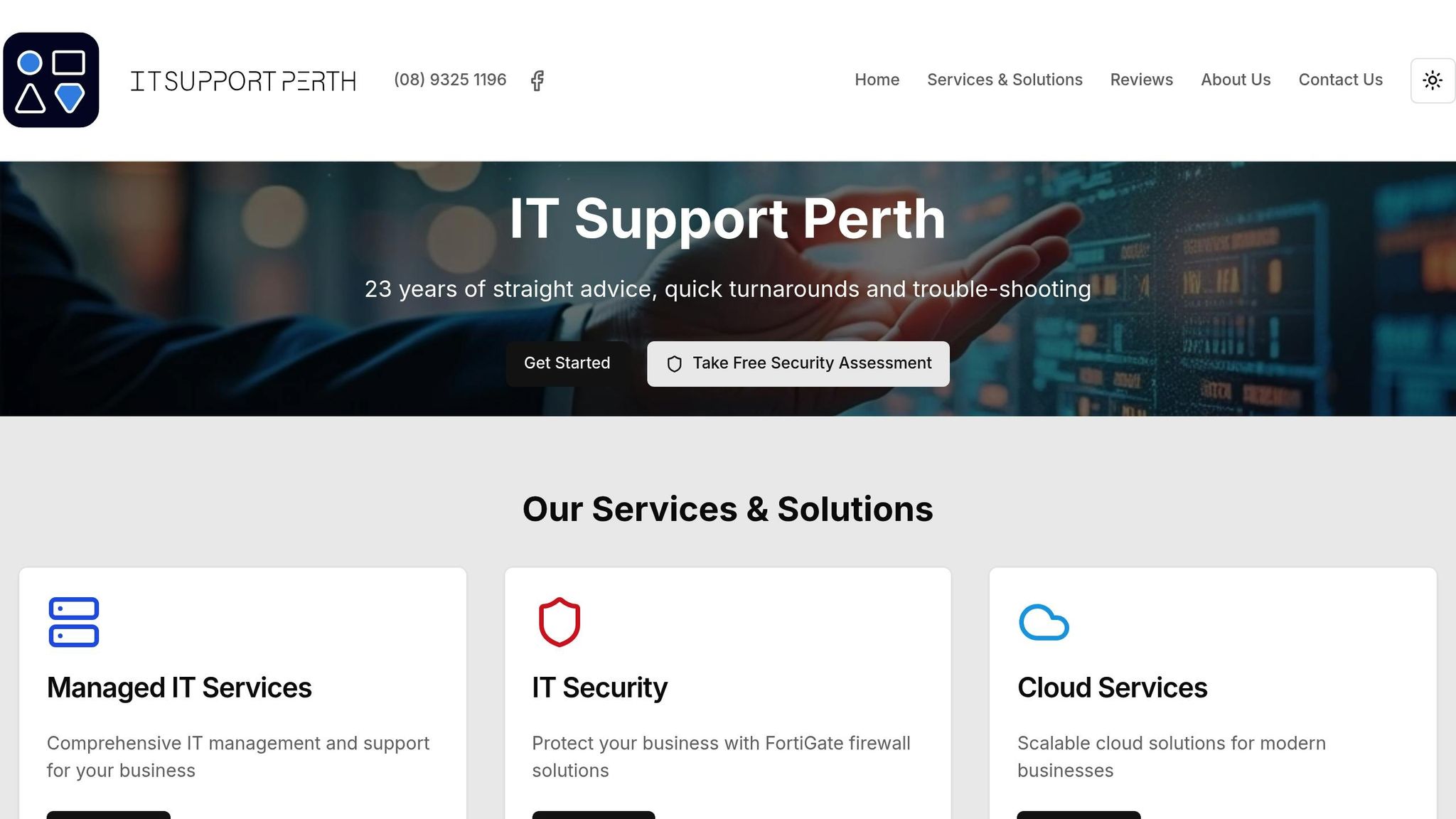
A great example of how MSPs can support Zero Trust is IT Support Perth. They specialize in creating tailored solutions that align with Zero Trust principles while working within SMB budgets. Their strategy focuses on leveraging existing infrastructure and implementing robust security measures.
IT Support Perth offers services like FortiGate firewalls to ensure secure network segmentation by monitoring traffic between zones. Their AI-driven diagnostics and predictive maintenance enable faster issue resolution, critical for the continuous monitoring Zero Trust requires. Additionally, their advanced email protection services address one of the most common attack vectors.
What sets them apart is their flexibility. Instead of a one-size-fits-all approach, they customize solutions based on each client’s specific needs and budget. Their 24/7 support and proactive monitoring ensure Zero Trust policies are consistently enforced, and any incidents are handled promptly. They also provide backup and disaster recovery solutions to meet the data protection and business continuity demands of Zero Trust frameworks, along with strategic IT consulting to align technology plans with Zero Trust principles.
Cutting Security Costs Through Outsourcing
Beyond operational benefits, outsourcing IT services can significantly reduce security costs. Small businesses can save 30–60% on operational expenses by outsourcing IT functions. In fact, 78% of small businesses report outsourcing IT tasks to improve efficiency and support growth.
"Outsourcing IT support is a strategic move that helps businesses reduce costs, enhance security, and stay ahead of technology challenges".
Outsourcing shifts IT expenses from capital expenditures (CapEx) to operating expenditures (OpEx), making costs easier to manage and predict. Instead of hefty upfront investments, businesses can rely on affordable monthly fees that scale with their needs.
MSPs also make high-end security tools more accessible by distributing costs across multiple clients. Tools like threat intelligence platforms, security information and event management (SIEM) systems, and enterprise-grade monitoring solutions become financially feasible for SMBs through this shared-cost model.
Scalability is another major advantage. MSP solutions are designed to grow with businesses, allowing them to pay only for what they need. As Matt Kraska, CEO of Lazorpoint, explains:
"As companies grow, in-house IT becomes a burden. Outsourcing offers cost savings, expertise, and efficiency, allowing businesses to focus on their strengths while scalable IT supports their growth".
The results speak for themselves. Organizations that implement Zero Trust with MSP support save nearly $1 million on average breach costs. Zero Trust solutions can cut breach risks by 50% and deliver a three-year return on investment of 92%.
As one expert puts it:
"Zero Trust doesn't have to mean zero budget. With the right tools and a step-by-step approach, any business can strengthen security without breaking the bank".
Managed IT services make this vision a reality by providing the expertise, tools, and support SMBs need to adopt Zero Trust without overextending their budgets.
Building Secure Systems Within Budget
Zero Trust security doesn’t have to break the bank or overwhelm your team. While many organizations recognize the importance of this approach, small enterprises often lag behind in adopting it. This gap presents both a challenge and an opportunity for small and medium-sized businesses (SMBs) willing to take a thoughtful, strategic path.
The key to implementing Zero Trust effectively - and affordably - lies in three main principles: prioritization, phased deployment, and smart partnerships. Instead of overhauling everything at once, focus on protecting your most valuable assets - the ones cybercriminals are most likely to target. As Brian Dennis puts it:
"It's not just a product or service you can buy off the shelf. It's the security framework that requires a comprehensive approach."
Start by strengthening your core security measures. Begin with essential controls that deliver the biggest impact for the least effort and cost. Multi-factor authentication, endpoint security, and user training are crucial building blocks of any Zero Trust strategy. In many cases, these measures can be implemented using tools and systems you already have, saving you from unnecessary expenses.
For example, implementing Zero Trust doesn’t have to be financially overwhelming. A cloud-based tool suite might cost around $3,000 per year, while hiring a part-time security engineer for 10 hours a month at $150 per hour would run you about $18,000 annually. By leveraging your existing resources, such as firewalls, VPNs, and endpoint security solutions, you can often enforce stricter access controls without investing in entirely new systems. Many of these tools already include features like logging and alerting, which can support Zero Trust monitoring.
Taking a phased approach is another way to keep costs manageable. Start with a small, focused area of your business, then gradually expand your protections. This method allows you to spread expenses over time while refining your strategy as you go.
Partnering with managed IT service providers (MSPs) can also make a big difference. With 87.5% of SMBs already using or considering an MSP, these partnerships provide access to enterprise-grade tools, expert knowledge, and ongoing monitoring - without the high costs of building these capabilities in-house. This approach aligns perfectly with resource-conscious security planning.
The Zero Trust market is growing rapidly, expected to jump from $27.4 billion in 2022 to $60.7 billion by 2027. Early adopters are in a strong position to benefit from competitive pricing and increasingly accessible solutions as the market evolves.
Zero Trust offers SMBs a practical way to protect their data, operations, and customer relationships. Its "never trust, always verify" philosophy is well-suited to businesses looking for efficient and effective security measures.
Every organization’s Zero Trust journey will look different. Your industry, current infrastructure, and budget will shape your approach. The goal isn’t to achieve perfection overnight but to create a security framework that grows stronger over time - without exceeding your financial limits.
FAQs
What steps can small businesses take to implement Zero Trust security on a tight budget?
Small businesses can embrace Zero Trust security principles without breaking the bank by taking a few practical steps:
- Evaluate your current security setup: Start by identifying weak spots and focusing on protecting your most critical assets. This helps ensure your efforts are directed where they’ll have the biggest impact.
- Leverage what you already have: Many businesses already own basic security tools. Features like multifactor authentication (MFA) and access controls might just need to be activated or fine-tuned - no need for expensive new software.
- Train your employees: One of the most budget-friendly ways to boost security is by educating your team. Teaching them to spot phishing attempts or follow simple security practices can go a long way in reducing risks.
By concentrating on these high-impact areas, small businesses can start building a Zero Trust framework gradually and cost-effectively. For those in Perth looking for tailored IT support, IT Support Perth provides affordable solutions to help enhance security.
What challenges do SMBs face when adopting Zero Trust, and how can they address them?
Small and medium-sized businesses (SMBs) often struggle to adopt Zero Trust security due to tight budgets, small IT teams, and reliance on older, perimeter-based defenses. On top of that, adapting workflows and introducing new technologies without disrupting daily operations can feel like an uphill battle.
To address these challenges, SMBs can focus on affordable yet effective measures like multi-factor authentication (MFA) and identity and access management (IAM). These tools bolster security without requiring significant upfront investment. Gradual steps, such as implementing microsegmentation and providing regular employee security training, can help create a solid security framework over time. Additionally, cloud-based solutions offer access to advanced security tools without putting extra pressure on in-house teams.
By starting with small, manageable changes and steadily improving, SMBs can adopt Zero Trust principles without stretching their resources too thin.
How can managed IT service providers help small businesses adopt Zero Trust security without breaking the bank?
Managed IT service providers simplify the process of adopting Zero Trust security for small businesses, offering tailored strategies that align with unique needs and budgets. They concentrate on critical areas like identity and access management, real-time monitoring, and leveraging existing systems to keep costs manageable.
By providing the expertise to design and implement a Zero Trust framework, these providers ensure that every user and device is verified before gaining access. Additionally, they can incorporate affordable cloud-based solutions to boost security without demanding significant upfront spending. This allows small businesses to improve their security posture while staying within budget.