
Competitor analysis helps Perth small and medium businesses (SMBs) improve their digital strategies and grow. By studying competitors, businesses can:
- Upgrade technology: Compare tools like cloud platforms and automation to enhance efficiency.
- Improve marketing: Learn from competitor campaigns to boost engagement on websites, social media, and email.
- Enhance customer service: Analyze competitor support options to offer faster responses and better service.
For example, a local retailer increased online sales by offering real-time inventory tracking, and a service provider improved customer satisfaction by extending support hours. Competitor research also helps SMBs track performance and make data-driven decisions.
Key Takeaway: Regular competitor analysis can help Perth SMBs refine their strategies, improve customer experience, and stay competitive in the digital market.
Competitor Analysis Made Easy: Structure & Design Tips
Competitor Analysis in Digital Strategy
Small and medium-sized businesses (SMBs) in Perth use competitor insights in three key areas - technology, marketing, and customer service - to stay ahead in the digital game. Let’s explore how local businesses approach each area, along with tools and examples that guide their strategies.
Technology benchmarking allows businesses to compare their digital tools and systems with those of industry leaders. By examining competitors' use of cloud platforms, automation tools, and system integrations, SMBs can pinpoint areas where their own technology falls short. This helps them prioritize upgrades that improve efficiency and streamline operations.
Marketing analysis focuses on uncovering what works for competitors. By studying their campaigns, content strategies, and digital advertising efforts, businesses can refine their own approach to boost reach and engagement across websites, social media, and email marketing.
Customer service comparisons look at how competitors handle support. Factors like service hours, available support channels, and resolution times are evaluated. These insights help businesses enhance their own customer service, ensuring faster responses and better feedback systems.
Next, we’ll dive deeper into each of these areas, starting with technology benchmarking.
Perth SMB Success Examples
Spotting Market Gaps
A local retail business noticed competitors lacked real-time digital inventory tracking for customers. By offering live stock updates, they reduced out-of-stock inquiries and saw a jump in online sales.
Similarly, a professional services firm spotted a need for after-hours support. They added extended hours and 24/7 chat, attracting clients during off-peak times and increasing new customer sign-ups.
These kinds of insights often lead to targeted digital improvements.
Making Digital Upgrades
Using competitor data, businesses can address specific digital shortcomings. For example, a manufacturing company discovered that many rival websites struggled with mobile responsiveness. By optimizing their site for mobile users, they saw better mobile conversion rates and fewer visitors leaving their site prematurely.
They also enhanced site speed, streamlined the checkout process, and added industry-relevant content. The result? More page views, higher engagement, and improved organic traffic.
Tracking Performance
Many Perth businesses now use competitor benchmarking to guide their progress. For instance, a local service provider started generating monthly reports to compare their metrics against industry standards. This approach helped them identify areas for improvement, leading to quicker support response times, improved customer satisfaction, and higher retention rates.
Next, we’ll explore the pros and cons of competitor research.
sbb-itb-6052d70
Pros and Cons of Competitor Research
When considering competitor research, Perth SMBs should carefully evaluate its advantages and drawbacks:
Benefits
- Helps identify potential issues early, saving time and improving workflow efficiency [1].
- Supports the development of services that can grow and adapt to changing business needs [2].
Challenges
- Demands a dedicated investment of time and money.
- May result in commitments to long-term contracts, limiting flexibility [3].
Up next, dive into our step-by-step guide for conducting competitor analysis.
[1] Efficient time management is essential for SMBs, and addressing problems proactively can reduce downtime.
[2] Focus on IT solutions that align with evolving business requirements.
[3] Look for outsourced IT providers with month-to-month contract options to maintain agility.
Guide to Competitor Analysis
Step-by-Step Analysis Process
Taking a structured approach to competitor analysis can uncover useful insights. Here's how to get started:
- Collect competitor digital assets: Look at their website features, communication channels, and service descriptions. This helps establish a baseline for comparison.
- Identify core offerings: Break down their main services, how they deliver them, and any standout features.
- Evaluate customer experience: Check their response times, self-service options, and support channels to understand their customer service approach.
Focus on actions that will make the biggest difference for your business.
How IT Support Perth Can Help
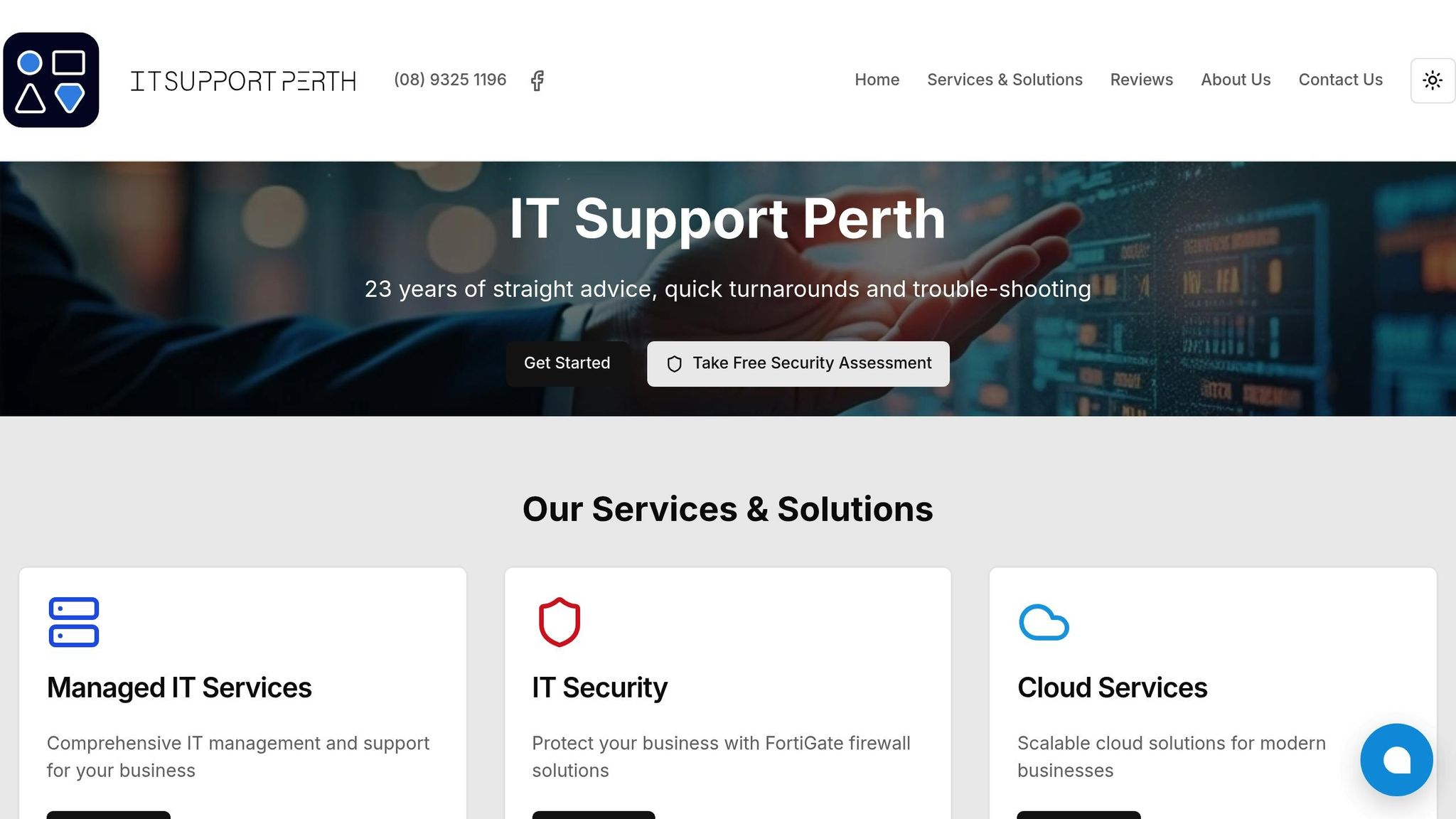
IT Support Perth offers services that align perfectly with the steps above, helping businesses stay competitive:
- System health monitoring: Keep track of uptime and performance to ensure smooth operations.
- Regular IT audits: Compare your IT capabilities with market trends and competitor benchmarks to stay ahead.
- Scalable cloud services: Adapt to changing needs with flexible, on-demand cloud solutions.
It's a good idea to revisit your competitor analysis every quarter. This helps you stay adaptable, improve efficiency, and adjust to changing market conditions.
Conclusion: Growth Through Competitor Analysis
Competitor analysis helps Perth SMBs sharpen their digital strategies, make smarter IT investments, and stay ahead of the competition. By leveraging competitor data, businesses can focus their efforts on IT and marketing improvements that deliver results. Following the steps outlined earlier, SMBs can turn insights into measurable progress in the digital space.
Key Takeaways
Perth SMBs can strengthen their position by concentrating on these areas:
- Align IT infrastructure: Match competitor benchmarks to improve performance and scalability.
- Proactive monitoring and support: Solve potential issues before they disrupt operations.
- Strategic advisory with market insights: Use market data to fuel growth and efficiency.
Make it a habit to review these strategies every quarter to stay in tune with market trends and remain competitive.